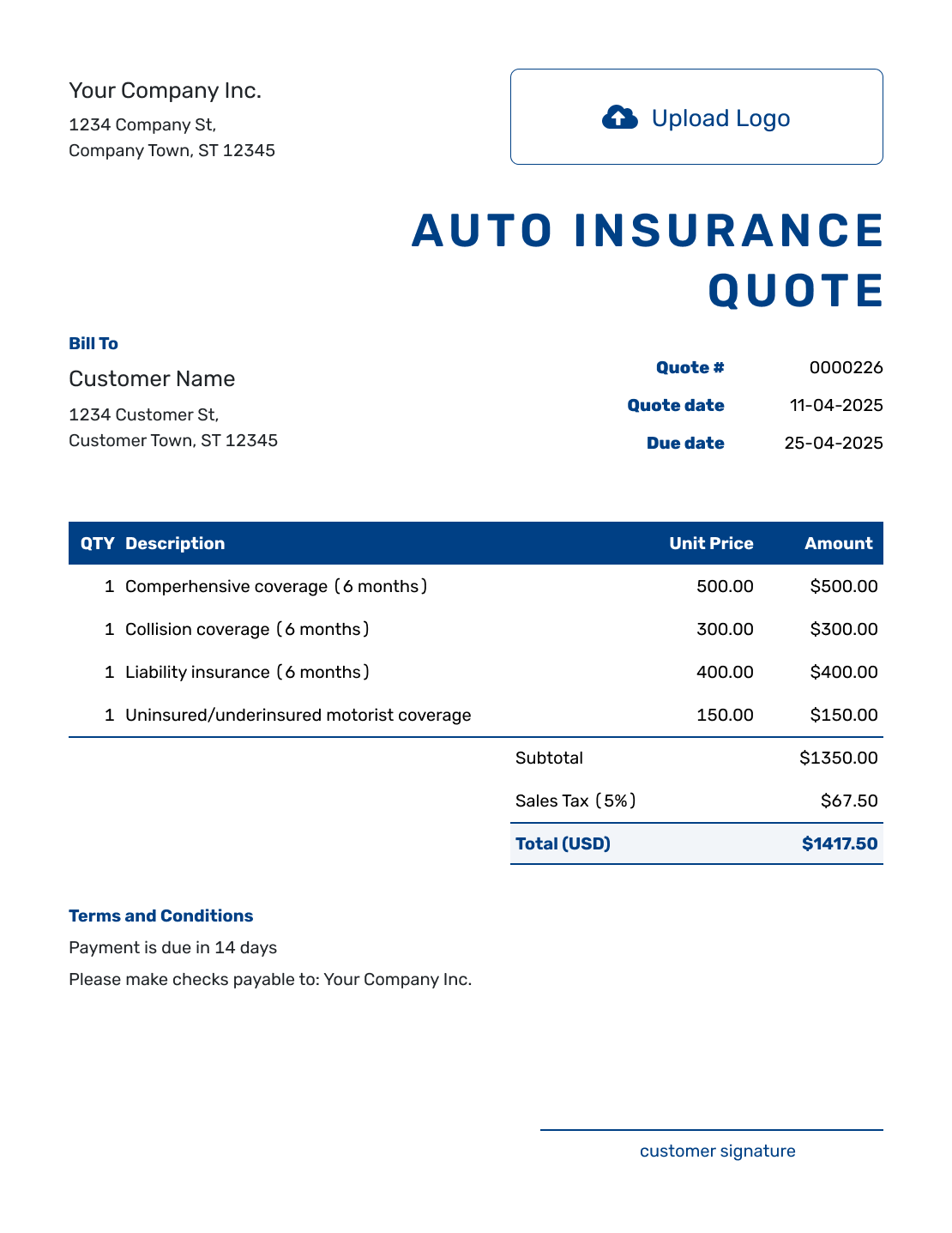
auto quotes car insurance refer to the process of obtaining price estimates for vehicle coverage from multiple providers, illustrated when a driver in Ohio inputs her vehicle details into an online portal and receives three distinct premium figures within minutes.
Understanding these estimates matters because they reveal cost drivers, enable budget planning, and empower consumers to negotiate better terms, a practice that has evolved from paper forms in the 1970s to real‑time digital platforms today.
This guide walks through the mechanics of pricing, the impact of personal factors, tools for accurate comparison, pitfalls to sidestep, and actionable steps for securing optimal coverage.
1. Pricing Dynamics
Insurers calculate premiums using actuarial models that weigh risk variables such as age, driving record, vehicle type, and geographic location. A higher‑risk driver may see a 20% surcharge, while a low‑risk profile can earn discounts for safety features.
These calculations influence the final quote, making it essential to understand each component before committing.
2. Data Accuracy Importance
- Exact Vehicle Details
Providing the correct VIN, mileage, and usage pattern ensures the quote reflects true risk; a misreported mileage can inflate premiums by up to 15%.
- Personal Information Consistency
Matching name and address across applications avoids duplicate records that can trigger higher rates; consistency saved a family in Texas $200 annually.
- Driving History Precision
Accurately reporting accidents and violations prevents punitive adjustments; omitting a minor ticket once led to a 10% premium increase for a driver in Florida.
Accuracy reduces unnecessary cost and speeds up the underwriting process.
3. auto quotes car insurance Comparison Tools
- Aggregator Websites
Platforms like NerdWallet or The Zebra pull data from dozens of carriers, presenting side‑by‑side tables; a Chicago driver used an aggregator to identify a $150 cheaper plan.
- Direct Carrier Portals
Visiting insurer sites individually can reveal exclusive online discounts not shown on aggregators, such as a multi‑policy reduction offered by State Farm.
- Mobile Apps
Apps from companies like GEICO provide instant quotes after a few taps, allowing quick scenario testing for different deductibles.
Leveraging multiple tools maximizes visibility into the market.
4. Common Mistakes to Avoid
Skipping the credit‑score check, neglecting to disclose all drivers, or ignoring optional coverages like uninsured motorist protection can lead to gaps or inflated costs. For example, a family in Ohio omitted a teenage driver, resulting in a retroactive surcharge after a claim.
Awareness of these errors helps maintain accurate, affordable coverage.
5. Discounts and Savings Opportunities
- Safe Driver Programs
Telematics devices track mileage and behavior; a driver in Arizona reduced his premium by 12% after demonstrating low‑speed braking.
- Bundling Policies
Combining home and auto insurance often yields a 10‑15% discount; a Seattle resident saved $300 annually by bundling.
- Loyalty and Early‑Renewal
Some carriers reward multi‑year renewals with reduced rates; a long‑time customer in Michigan received a $50 credit.
Proactively seeking these incentives can shave significant dollars off the annual bill.
6. Impact of Vehicle Choice
High‑performance cars typically attract higher premiums due to repair costs and theft risk, while safety‑rated models like the Subaru Outback often enjoy lower rates. Selecting a vehicle with advanced driver‑assist systems can unlock manufacturer‑offered discounts.
Understanding this link guides both purchase and insurance decisions.
7. Legal and Regulatory Considerations
State minimum liability requirements set the baseline for coverage; exceeding these minima provides better protection but raises the quote. Some states mandate uninsured motorist coverage, influencing the final figure.
Staying informed about local laws prevents unexpected gaps.
8. Long‑Term Policy Management
Reviewing auto quotes car insurance annually aligns coverage with life changes such as moving, adding drivers, or purchasing a new vehicle. Regular audits can uncover new discounts or better providers.
Consistent monitoring ensures continued value.
Frequently Asked Questions
Below are common queries about obtaining and using auto quotes car insurance.
Question 1: How many quotes should be compared before choosing a policy?
Comparing at least three distinct estimates balances thoroughness with practicality, revealing price ranges and coverage differences without overwhelming the decision‑making process.
Question 2: Does a higher credit score always lower the quote?
Generally, insurers view higher credit scores as indicators of lower risk, leading to reduced premiums; however, the impact varies by carrier and state regulations.
Question 3: Are online aggregators reliable for accurate pricing?
Aggregators provide solid baseline figures, but some discounts are exclusive to direct carrier channels; cross‑checking ensures the most accurate final cost.
Question 4: What role does mileage play in the quote?
Lower annual mileage signals reduced exposure, often resulting in lower rates; many insurers offer pay‑per‑mile plans that adjust premiums accordingly.
Question 5: Can adding safety features reduce the premium?
Features such as anti‑lock brakes, airbags, and collision‑avoidance systems typically qualify for discounts, as they lower the likelihood of severe claims.
Question 6: How often should the policy be reviewed?
An annual review aligns coverage with changes in driving habits, vehicle ownership, and market rates, ensuring continued affordability and adequate protection.
14 Practical Tips for Better Auto Quotes Car Insurance
Implement these steps to secure the most favorable rates.
Tip 1: Verify vehicle identification number accuracy before submitting.
Tip 2: Update address and marital status to reflect current circumstances.
Tip 3: Include all licensed drivers in the household on each application.
Tip 4: Request a copy of the credit‑based insurance score from each carrier.
Tip 5: Use a telematics program if disciplined driving habits exist.
Tip 6: Bundle home or renters insurance with auto coverage for multi‑policy discounts.
Tip 7: Inquire about discounts for safety‑feature installations.
Tip 8: Compare both liability‑only and full‑coverage quotes to gauge necessity.
Tip 9: Review state minimum requirements and consider higher limits for better protection.
Tip 10: Explore pay‑per‑mile or usage‑based plans if annual mileage is low.
Tip 11: Check for loyalty or multi‑year renewal incentives.
Tip 12: Re‑evaluate the deductible amount; higher deductibles lower premiums.
Tip 13: Schedule an annual policy audit to capture new discounts or life‑event changes.
Tip 14: Keep a record of all communications and quote details for easy comparison.
Conclusion
The examined aspects—pricing dynamics, data precision, comparison tools, common errors, discounts, vehicle influence, regulatory context, and ongoing management—form a comprehensive framework for mastering auto quotes car insurance.
By applying the outlined strategies and tips, drivers can navigate the market confidently, securing coverage that balances cost, protection, and future flexibility.

